EN
EN

Engineers should select steel pipes by matching material grade, manufacturing method, diameter, wall thickness, pressure and temperature requirements, corrosion environment, connection method, applicable standards, and lifecycle cost to the actual piping application. The best pipe is not necessarily the strongest or thickest option; it is the one that provides the required performance with an appropriate safety margin and practical installation and maintenance requirements.
Industrial pipe selection becomes particularly important when the system transports high-pressure fluids, corrosive chemicals, steam, oil, gas, or large volumes of water. A structured selection process can prevent problems such as premature corrosion, excessive pressure loss, insufficient wall thickness, weld failures, or unnecessary material costs.
The first step is to identify the mechanical and chemical requirements of the service. Engineers should evaluate tensile strength, yield strength, toughness, corrosion resistance, temperature capability, weldability, and compatibility with the process medium.
Carbon steel is commonly selected for many general industrial piping applications because it offers a practical balance between mechanical performance and cost. Stainless steel may be preferred when corrosion resistance is more important, while alloy steel can be considered for demanding temperature or pressure conditions.
The process medium should always be evaluated together with temperature and concentration. The same material may perform differently under different combinations of chemical composition and operating temperature.
Steel pipes can be produced using different manufacturing processes, including seamless and welded methods. The selection should be based on the application rather than assuming that one process is universally better.
Seamless construction can be advantageous for certain high-pressure and high-temperature services, while welded pipes can provide practical solutions for larger diameters and many structural or transmission applications. For welded products, engineers should pay particular attention to weld quality, inspection requirements, and the applicable manufacturing standard.
In systems where electric resistance welding is appropriate, ERW steel pipes can provide a practical option for applications requiring consistent dimensions and efficient production.
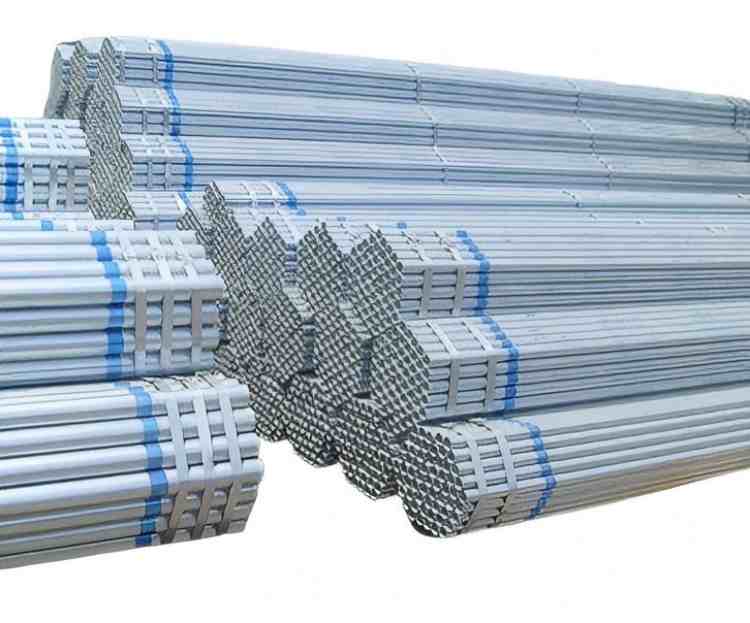
Alloy steel becomes particularly relevant when the operating conditions demand properties that may not be adequately provided by ordinary carbon steel. Alloying elements can improve strength, temperature resistance, hardenability, or other performance characteristics depending on the grade.
High-temperature equipment such as boilers, heat exchangers, superheaters, reheaters, and other pressure equipment may require carefully selected alloy steel grades. The material must be evaluated according to the actual temperature, pressure, medium, and applicable specification.
For demanding thermal services, alloy pipe products can be evaluated according to the relevant ASTM or other applicable standards, with particular attention to material grade, dimensions, heat treatment, and mechanical requirements.
Pipe diameter influences flow capacity, pressure loss, equipment sizing, and installation requirements. Increasing diameter can reduce velocity and pressure drop for a given flow rate, but it also increases material consumption and potentially installation cost.
Engineers should determine the required flow rate first and then evaluate the relationship between diameter, velocity, pressure drop, and process requirements. The selected diameter should also be compatible with pumps, valves, fittings, instruments, and other connected equipment.
Large-diameter systems may require additional attention to pipe support, transportation, field welding, thermal expansion, and structural loads.
Wall thickness must provide sufficient pressure capacity while allowing for manufacturing tolerance, corrosion allowance, erosion, and other expected deterioration. Engineers should not select wall thickness solely from nominal operating pressure.
Temperature affects allowable material stress, while external loads may introduce bending or local stress. Underground installations may also face soil loads, while above-ground piping may experience wind, vibration, thermal movement, and support reactions.
The final wall thickness should therefore reflect the complete mechanical design rather than only internal pressure.
Corrosion assessment should begin with the process medium and installation environment. Important variables may include pH, chloride concentration, moisture, dissolved gases, operating temperature, contaminants, and exposure to external atmospheric or soil conditions.
For carbon steel systems, engineers may need to specify a corrosion allowance or protective coating. In more aggressive environments, a corrosion-resistant alloy or stainless steel grade may provide a better lifecycle solution.
The goal is not simply to select the most corrosion-resistant material available. Instead, the material should provide sufficient resistance for the expected service while maintaining reasonable procurement, fabrication, and maintenance costs.
Longitudinal submerged arc welded pipe is often considered for large-diameter and heavy-wall applications where plate-based manufacturing provides practical advantages. Its suitability depends on the required dimensions, steel grade, weld quality, design pressure, and applicable standard.
LSAW pipes can therefore be evaluated for applications such as oil and gas transportation, water infrastructure, and other large-diameter industrial piping systems. Engineers should assess the complete product specification rather than selecting LSAW construction solely because of pipe diameter.
Applicable standards define important requirements for dimensions, materials, manufacturing, testing, and acceptance criteria. Selecting the standard early in the engineering process helps ensure compatibility between the pipe and other components.
Common considerations include ASTM, API, ASME, EN, DIN, and JIS requirements, depending on the application and destination market. Engineers should verify whether the project specification requires a particular material standard, dimensional standard, inspection level, or certification.
It is also important to distinguish between material standards and dimensional standards. A pipe may satisfy the required material specification while still being unsuitable if its dimensions or connection requirements do not match the system.
| Selection Factor | Engineering Consideration |
|---|---|
| Pressure | Determine required wall thickness and material strength. |
| Temperature | Verify material properties and allowable stress at service temperature. |
| Corrosion | Evaluate internal and external degradation mechanisms. |
| Diameter | Balance flow requirements, pressure loss, cost, and installation. |
| Manufacturing method | Match seamless or welded construction to application requirements. |
| Weld quality | Consider inspection and testing requirements for welded products. |
| Standard | Ensure material, dimensions, testing, and certification comply with the project. |
| Lifecycle cost | Consider procurement, installation, maintenance, and replacement costs. |
The lowest purchase price does not always result in the lowest overall cost. A less expensive pipe may require more frequent coating maintenance, corrosion monitoring, replacement, or downtime. Conversely, a more expensive material may not provide meaningful additional value if the operating environment is relatively mild.
A lifecycle-cost approach considers procurement, transportation, fabrication, installation, inspection, maintenance, energy consumption, expected service life, and replacement risk. This approach is particularly useful for large industrial projects where piping represents a significant long-term investment.
A clear purchase specification should normally identify the pipe material grade, manufacturing method, outside diameter or nominal size, wall thickness or schedule, applicable standard, length requirements, end finish, inspection requirements, testing, coating requirements, and certification.
For critical services, additional requirements may cover chemical composition, mechanical testing, hydrostatic testing, non-destructive examination, heat treatment, impact testing, and traceability.
Providing complete technical information reduces ambiguity during procurement and makes it easier for suppliers to offer products that genuinely match the engineering requirements.
A practical selection process should begin with process conditions and then move toward material, dimensions, manufacturing method, standards, and lifecycle considerations. Engineers should first define pressure, temperature, medium, flow rate, and installation environment. They can then narrow the options according to required strength, corrosion resistance, diameter, wall thickness, and manufacturing route.
The final candidate should be checked against the complete piping system, including valves, flanges, fittings, supports, pumps, and equipment connections. This system-level verification helps prevent a pipe from being technically suitable in isolation but incompatible with the rest of the installation.
Steel pipe selection should be treated as an engineering decision rather than a simple product comparison. Material grade, pressure, temperature, corrosion, dimensions, manufacturing method, standards, weld quality, and lifecycle cost all influence whether a pipe will provide reliable service. By matching these factors to actual operating requirements, engineers can select piping that offers an appropriate balance of safety, durability, performance, and total cost.
 Call us on:
  Email Us:
  No.68 Hezuo Road, Shijiazhuang City, Hebei Province, China