EN
EN

The service life of steel pipes in industrial piping systems is primarily determined by material grade, corrosion environment, operating pressure and temperature, wall thickness, fluid velocity, mechanical loading, manufacturing quality, and maintenance conditions. A pipe does not have a fixed service life simply because it is made from carbon steel, stainless steel, or another steel grade. Its durability depends on how the selected pipe interacts with the actual operating environment over time.
For industrial projects, the most useful approach is to evaluate pipe life as a combination of structural integrity, corrosion allowance, fatigue exposure, erosion, and inspection results. This allows engineers to identify deterioration mechanisms before they become critical.
Steel composition determines important mechanical and corrosion-related properties. Carbon steel is widely used for general industrial piping because of its strength, availability, and cost efficiency. Stainless steel is often selected when improved corrosion resistance is required, while alloy steel may be appropriate for elevated-temperature or high-pressure applications.
Material selection must match the process rather than being based only on nominal strength. A material with excellent mechanical properties may still have poor service performance if it is chemically incompatible with the process medium.
Engineers should consider yield strength, tensile strength, temperature capability, corrosion resistance, weldability, and relevant material standards when evaluating pipe options.
Corrosion gradually reduces wall thickness and can eventually compromise pressure integrity. Internal corrosion may occur when the conveyed medium reacts with the pipe material, while external corrosion can develop because of moisture, chemicals, soil conditions, atmospheric exposure, or damaged protective coatings.
The corrosion mechanism can vary considerably between applications. Uniform corrosion causes relatively predictable wall loss, whereas localized corrosion such as pitting may produce serious damage in a small area.
Corrosion control may involve appropriate material selection, coatings, insulation design, corrosion inhibitors, cathodic protection, drainage, and regular inspection. The most effective strategy depends on the actual environment.
Internal pressure creates hoop and longitudinal stresses in the pipe wall. Higher pressure generally requires greater wall thickness or a material with suitable mechanical strength. Temperature also affects allowable stress and can influence creep, thermal expansion, and fatigue behavior.
Repeated temperature changes can be particularly important in systems that undergo frequent startup and shutdown. The pipe expands when heated and contracts when cooled. If the piping layout, supports, or expansion provisions do not accommodate this movement, additional stresses can develop.
High-temperature systems therefore require more than a simple comparison between operating pressure and nominal pipe rating. Material properties at the actual service temperature must be considered.
Not necessarily. Stainless steel can provide strong resistance to many corrosive environments, but its performance depends on the specific grade and process conditions. Certain environments can cause localized corrosion or other degradation mechanisms even when the pipe is classified as stainless steel.
For applications involving water, chemicals, food processing, pharmaceuticals, heat exchangers, or corrosive fluids, engineers should select the grade according to the actual medium, temperature, chloride level, acidity, and other relevant conditions.
For example, stainless steel pipes are available in grades such as 304, 304L, 316, 316L, 321, 317L, 310S, and 904L, allowing specifications to be matched more closely to application requirements.
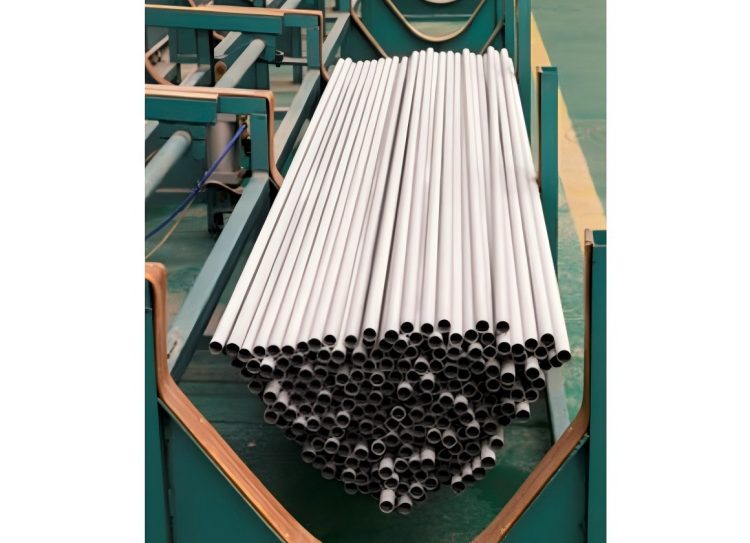
Manufacturing quality affects the uniformity and reliability of the pipe's pressure boundary. Dimensional accuracy, wall thickness consistency, welding quality, heat treatment, surface condition, and inspection procedures can all influence long-term performance.
Welded and seamless pipes have different manufacturing characteristics, but neither category is automatically superior for every application. The appropriate choice depends on diameter, wall thickness, pressure, temperature, material, applicable standard, and project requirements.
For welded pipes, weld integrity is particularly important because the longitudinal or spiral weld becomes part of the pressure boundary. Appropriate non-destructive examination and manufacturing controls can help verify weld quality.
High fluid velocity can accelerate erosion, particularly when the medium contains suspended solids or when the pipe experiences turbulent flow near fittings, bends, valves, or changes in diameter.
Erosion-corrosion can be especially challenging because mechanical removal of the protective surface can expose fresh metal to the process medium. Over time, this may increase the rate of wall loss.
Engineers should therefore consider flow velocity during system design rather than treating pipe selection as an isolated material decision.
Wall thickness provides a physical margin against corrosion, erosion, mechanical damage, and pressure-related stress. A pipe with insufficient thickness may reach its minimum allowable wall thickness sooner than expected when corrosion or erosion occurs.
However, simply choosing a much thicker pipe is not always the most efficient solution. Excess material can increase weight, cost, welding requirements, and thermal expansion forces. The design should instead establish an appropriate wall thickness together with a realistic corrosion allowance.
Inspection data can then be used to compare actual wall loss against the assumed deterioration rate.
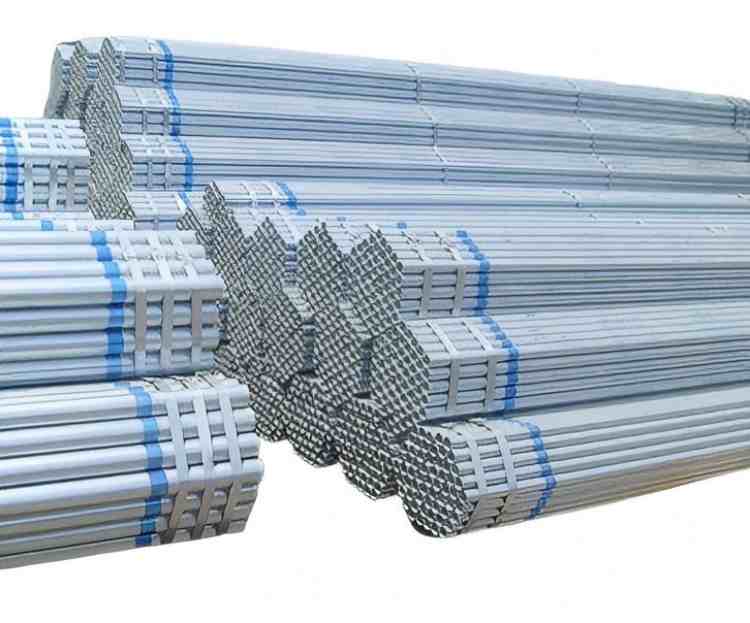
Spiral welded pipe can be attractive for large-diameter piping because the manufacturing process forms the pipe from steel strip into a spiral configuration. Its application can include water transmission, infrastructure, and certain energy-related systems where the relevant design and quality requirements are satisfied.
A ssaw pipes solution should be evaluated according to diameter, wall thickness, steel grade, welding quality, pressure requirements, coating system, and service environment. The manufacturing method alone does not determine the expected service life.
Carbon steel requires particular attention in environments where corrosion is a significant risk. Protective coatings, proper drainage, insulation management, corrosion monitoring, and periodic thickness measurements can help control deterioration.
In industrial plants, inspection programs often combine visual inspection with non-destructive testing and ultrasonic thickness measurement. Historical readings are especially valuable because they allow engineers to estimate actual wall-loss rates rather than relying solely on theoretical assumptions.
Carbon steel pipes can provide effective service in many industrial applications when the material grade, thickness, corrosion protection, and operating conditions are appropriately specified.
| Lifecycle Factor | What Engineers Should Monitor |
|---|---|
| Corrosion | Wall thickness, corrosion rate, pitting, coating condition. |
| Pressure | Operating pressure, pressure fluctuations, and transient events. |
| Temperature | Operating range, thermal cycling, and expansion effects. |
| Flow | Velocity, turbulence, solids content, and erosion risk. |
| Mechanical loading | Support condition, vibration, external loads, and thermal movement. |
| Welds | Weld integrity and indications identified during inspection. |
| Coatings | Damage, degradation, adhesion, and exposed metal. |
The most effective approach combines suitable material selection with realistic design assumptions and condition-based maintenance. Engineers should establish the expected corrosion mechanisms during the design phase, specify an appropriate corrosion allowance, and select protective measures where required.
During operation, inspection results should be used to update the understanding of actual deterioration. If measured wall loss is significantly higher than expected, the inspection interval, operating conditions, material selection, or corrosion-control strategy may need to be reconsidered.
The service life of steel pipes is determined by the interaction between material, design, manufacturing quality, operating environment, and maintenance. Corrosion, pressure, temperature, erosion, mechanical loading, and wall thickness all influence how quickly a pipe approaches its allowable condition. A lifecycle-based approach—supported by appropriate material selection and periodic inspection—provids a more reliable basis for predicting and extending industrial pipe service life.
 Call us on:
  Email Us:
  No.68 Hezuo Road, Shijiazhuang City, Hebei Province, China