EN
EN

Different pipe fittings improve industrial piping systems by controlling flow direction, changing pipe diameter, creating branches, connecting equipment, and simplifying installation or maintenance. The right fitting also helps maintain pressure integrity, reduce unnecessary flow resistance, and improve the long-term reliability of the pipeline.
In oil and gas, power generation, chemical processing, water treatment, and other industrial applications, fitting selection should therefore be based on more than pipe size. Pressure, temperature, fluid characteristics, connection method, material compatibility, and maintenance requirements all matter.
Industrial piping systems typically use elbows, tees, reducers, couplings, nipples, caps, crosses, and other specialized fittings. Each serves a different engineering purpose.
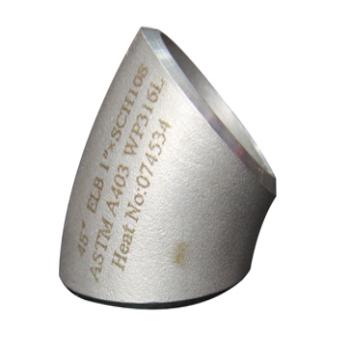
Elbows change the direction of a pipeline, commonly at 45° or 90°. Selecting the correct elbow radius can help manage pressure loss and flow disturbance.
Tees and crosses create branch connections. They are commonly used where process lines must distribute media to several pieces of equipment or different sections of a plant.
Reducers connect pipes of different diameters. Concentric reducers are often used where the pipe centerline should remain aligned, while eccentric reducers are useful where maintaining the top or bottom pipe level is important.
Couplings and nipples connect piping components over relatively short distances. They are particularly useful in compact piping layouts and equipment connections.
Hebei Leading supplies several categories of industrial fittings, including carbon steel and stainless steel buttweld fittings, forged steel fittings, nipple pipe fittings, stainless steel 150LB fittings, and ductile iron grooved fittings.
Every change in direction, diameter, or flow path introduces additional hydraulic resistance. Poor fitting selection or unnecessarily complex routing can therefore increase pressure loss and pumping requirements.
For example, a reducer should provide an appropriate transition between pipe sizes, while elbows should be selected according to the available space and hydraulic requirements. Engineers should also avoid excessive fittings when a simpler piping layout can achieve the same process function.
The objective is not merely to minimize the number of fittings. It is to create a system that balances flow performance, mechanical strength, installation efficiency, and maintainability.
Connection type has a major influence on piping performance.
Buttweld fittings are widely used in process piping where permanent welded connections and a continuous internal flow path are required. ASME B16.9 covers dimensions, tolerances, ratings, testing, and marking requirements for factory-made wrought buttwelding fittings.
Socket weld fittings are commonly selected for smaller-diameter piping where strong welded connections are needed.
Threaded fittings offer convenient assembly and replacement without field welding. Forged threaded and socket-weld fittings are covered by ASME B16.11, including requirements for ratings, dimensions, tolerances, materials, and marking.
The appropriate connection should be determined by service pressure, operating temperature, pipe size, fluid characteristics, applicable piping codes, and maintenance strategy.
A reliable pipe fitting specification should consider:
Design pressure and temperature
Pipe material and corrosion environment
Fluid or gas being transported
Nominal pipe size and wall thickness
Buttweld, socket weld, threaded, or grooved connection
Applicable ASME, ASTM, DIN, EN, or project standards
Inspection and maintenance requirements
In industrial projects, choosing a technically suitable fitting from the beginning can reduce installation problems, leakage risks, premature replacement, and unnecessary maintenance.
Elbows are normally used to change pipeline direction. Common configurations include 45° and 90° elbows.
Reducers are commonly used. Concentric and eccentric reducers are selected according to piping layout and process requirements.
Buttweld fittings are welded directly edge-to-edge with the pipe, while socket weld fittings receive the pipe inside a recessed socket before welding. Selection depends on pipe size, pressure class, service conditions, and project specifications.
Yes. Pipe nipples are connecting components used between fittings, valves, equipment, or other threaded piping components.
The performance of an industrial pipeline depends on how well every component works together. Selecting the correct pipe fittings for direction changes, branches, diameter transitions, equipment connections, and maintenance points can improve flow performance while supporting a safer and more reliable piping system.
Hebei Leading provides a broad range of industrial pipe fitting solutions for oil and gas, power generation, refining, mining, water, and wastewater applications, helping project buyers match fitting type, material, connection, and standard to specific operating requirements.
 Call us on:
  Email Us:
  No.68 Hezuo Road, Shijiazhuang City, Hebei Province, China